
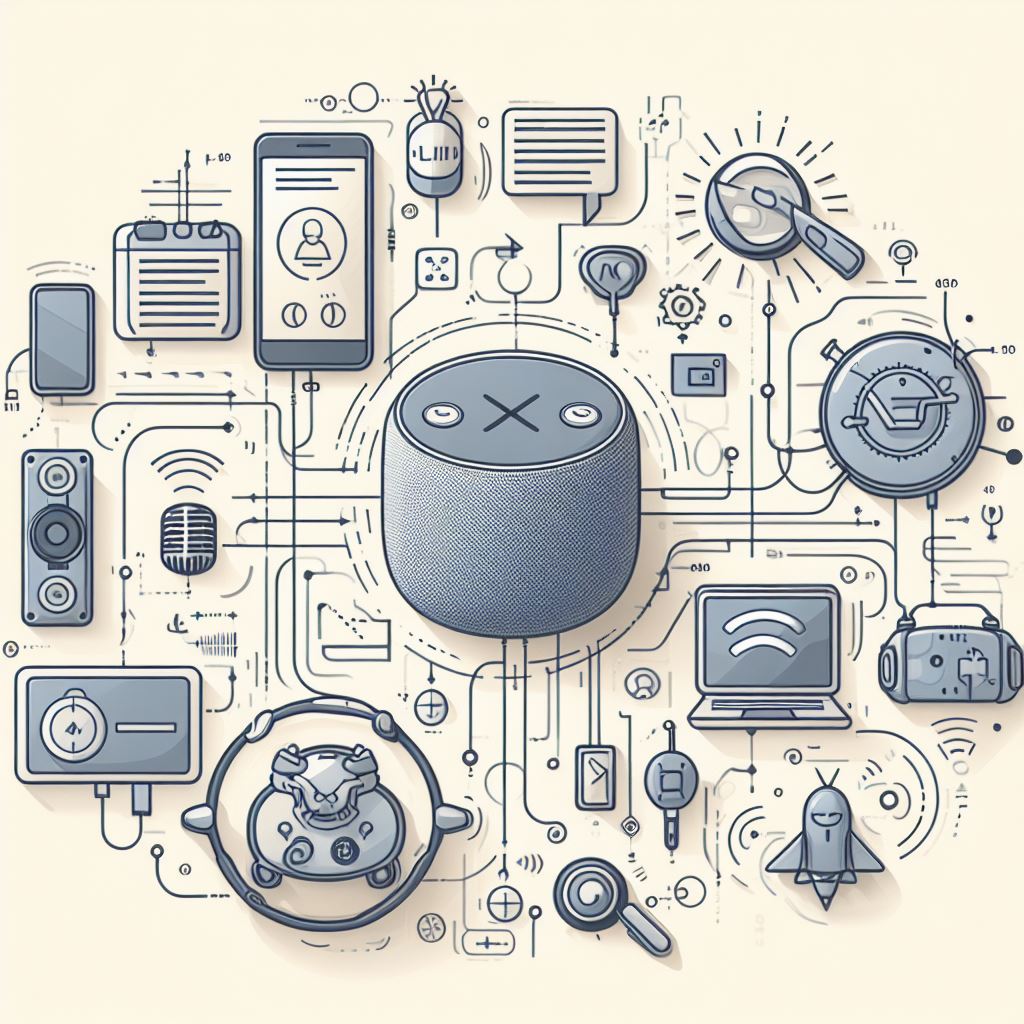
ONCE and Mindgeist collaborate to transform access to services through Alexa skills that combine advanced voice interaction, accessibility and inclusive design.
Key points
- Integration of multiple voice solutions adapted to users with visual disabilities.
- Data and dynamic flow management to optimize conversational experiences.
- Automation of processes in volunteering, activities and content access.
- Inclusive design based on accessibility standards.
- Scalable platforms applicable to education, entertainment and more.
Technological Innovation at the Service of Inclusion
Accessibility is not only a priority for the Organización Nacional de Ciegos Españoles (ONCE, the Spanish National Organization of the Blind), but a cornerstone of its mission to guarantee equal opportunities for people with visual disabilities. In an increasingly complex digital world, technological tools must adapt to meet specific accessibility and inclusion needs. However, these advances require meticulous planning and flawless technical execution to guarantee tangible, functional results.
Mindgeist, with its experience in voice technologies and inclusive design, teamed up with ONCE to face a series of unique challenges. The goal was clear: to create solutions that went beyond existing technology, harnessing the capabilities of voice assistants to provide essential services in an accessible, intuitive and functional way. This case covers four key areas that represent users’ everyday challenges: volunteering, organized activities, access to bibliographic content and access to audiovisual content.
Challenges Posed by ONCE
Throughout the project, three main challenges were identified that guided the development of the solutions:
1. Limited Access to Information and Services
The services ONCE offers, although robust, relied heavily on traditional interaction systems such as web pages and call centers. For many users, these methods were cumbersome, slow or inaccessible, especially for those with visual disabilities.
For example:
- Volunteering requests required multiple manual steps and constant communication with operators.
- Activity bookings depended on systems that were not optimized for users with screen readers or assistive devices.
- Access to books in DAISY format required specific devices or software that made the experience difficult.
- Audio-described films were available, but locating and playing them was unintuitive and fragmented.
2. Ambiguity in Interaction
Queries made by users often fell into misinterpretation errors. For example:
- Searching for books such as El Quijote returned no results because the full title did not match “Don Quijote de la Mancha” in the MARC databases.
- Searches for audiovisual content such as “action films” or “comedies” were not prepared to handle broad, contextual terms.
- The voice interaction mechanics in traditional systems failed to adapt to ambiguous or unstructured queries.
3. Need for Inclusive, Scalable Design
Any solution had to:
- Comply with international accessibility standards such as WCAG.
- Adapt to the specific needs of ONCE users, many of whom depend exclusively on non-visual interaction.
- Scale in functionality to include new services and capabilities as needs evolved.
Vision: Technology at the Service of People
The collaboration between ONCE and Mindgeist was guided by a clear vision: to democratize access to information, services and content through technology that is accessible, intuitive and transformative. This vision meant not only solving today’s problems but also building a technological infrastructure ready for future challenges.
The solution had to:
- Simplify complex processes such as activity management or access to specialized content.
- Optimize voice interaction through conversational flows that are understandable, efficient and adapted to natural language.
- Transform digital accessibility by offering tools that let users be more autonomous in their daily lives.
Mindgeist drew on its experience with voice assistants such as Alexa to design skills that were not only functional but also scalable, customizable and able to adapt to different contexts, from entertainment to professional training and assessment.
Why Voice Technology?
Voice technologies offer key advantages for overcoming accessibility barriers:
- Natural Interaction:
- Speaking is an intuitive form of interaction, removing the need for complex visual interfaces.
- Immediate Access:
- Voice assistants are designed to respond in real time, reducing waiting times for queries or requests.
- Adaptability:
- Voice skills can easily be adjusted to include new features, categories and services.
In this context, the skills developed not only demonstrated the potential of voice technology but also set a standard for future accessibility-oriented solutions.
Impact Beyond ONCE
This case goes beyond the specific collaboration with ONCE by showing how a well-designed technological infrastructure can be applied in sectors such as:
- Education: Creating accessible learning platforms based on voice interaction.
- Entertainment: Improving the content consumption experience through personalized recommendations and accessibility.
- Public Services: Optimizing citizens’ interaction with government services through voice assistants.
The vision of ONCE and Mindgeist is not only to solve immediate problems but also to inspire other organizations to adopt similar approaches to promote digital inclusion in all its forms.
Solutions Implemented: The ONCE Skills
1. Voluntarios ONCE (ONCE Volunteers)
Goal: Connect users with volunteering services in an accessible and efficient way.
- Automation of the Request Process:
- Users can request volunteers by stating the type of help, date and time, all through voice commands.
- Real-Time Tracking:
- Automatic confirmations and updates on the status of requests.
- Key Impact:
- Fewer barriers to asking for help, increasing users’ autonomy.
2. Actividades ONCE (ONCE Activities)
Goal: Simplify the management of and access to inclusive activities.
- Centralization of Information:
- A dynamic database that stores activities, schedules and locations.
- Personalized Conversational Flows:
- Users can search for activities by type, date or place, and book directly with voice commands.
- Results:
- A 40% increase in participation thanks to improved accessibility.
3. Biblioteca Digital ONCE (ONCE Digital Library)
Goal: Democratize access to bibliographic content through voice technology.
- Advanced Semantic Search:
- Resolution of ambiguous queries such as “1984” or “El Quijote” through contextual interpretation.
- DAISY Format Conversion:
- Automated process to adapt books to a format Alexa can play, preserving the original structure.
- Key Impact:
- Users access bibliographic content more intuitively, eliminating the frustrations typical of traditional searches.
4. Audesc: Audio-Described Films
Goal: Make audio-described films easily accessible to people with visual disabilities.
- Content Management:
- Consolidation of catalogs in a unified database with structured metadata.
- Navigation by Voice Commands:
- Users can search by genre, title or description, and receive personalized recommendations.
- Results:
- A 50% increase in the use of the service, improving the experience of accessing audiovisual content.
Technology Behind the Case
Scalable, Modular Backend
All of these solutions share a backend developed by Mindgeist that enables:
- Flexibility:
- Supports multiple data types and conversational flows.
- Automation:
- Reduces manual processes to a minimum, optimizing resources and time.
- Scalability:
- Design ready to integrate new features and categories.
Semantic Search and Natural Language Processing
The implementation of semantic search makes it possible to interpret ambiguous queries, adapting to users’ needs:
- Correction of Variations:
- Translates colloquial or incomplete terms into processable queries.
- Dynamic Interpretation:
- Adapts answers to the context, improving accuracy.
Inclusive Design
All the skills have been designed under accessibility standards, guaranteeing that users can interact autonomously, regardless of their abilities.
Global Impact
The collaboration between ONCE and Mindgeist has resulted in a tangible digital transformation:
- Autonomy and Accessibility:
- Users can access key services more autonomously and without barriers.
- Operational Optimization:
- Automation has allowed ONCE to focus resources on continuously improving its services.
- Scalable Model:
- The technology developed serves as a basis for future solutions in education, training and other sectors.
The ONCE case shows how voice technology can be used to solve complex accessibility challenges, delivering meaningful, functional experiences for its users. Mindgeist not only developed functional solutions but also showed how a solid technical infrastructure can be a catalyst for social change.
Would you like to explore how these technologies can transform your projects? Mindgeist is ready to help you.